|
|
 |

 October 27, 2005 Thursday October 27, 2005 Thursday
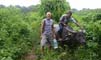
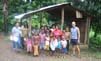
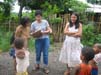
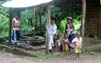
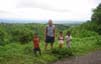
Visiting the Aetas
Who are the Aetas?
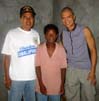
Physically, the Aetas are short, dark skinned with kinky hair. They resemble the aboriginals of Papua New Guinea more than they do the local Malay stock. Because of those attributes, they are and remain abject victims of racial discrimination. They took refuge into the mountains and learned to live off it.

My Grand Delusion
My application to the UP Mountaineers opened me up to a whole gamut of outdoor opportunities. When I rode with the Pinoy Mountain Bikers (PMTB) for the
Bataan Killer Loop ride, I met E-Boy and learned that there is an Aeta community within the mountain area. The Aetas trained the US Special Forces based in Clark Air Base about jungle survival. I got excited. I conjured images of chasing wild boars, tapping into esoteric water sources, creating fire in the driving rain - alá National Geographic. I decided then I wanted to live with the Aetas and learn all that. I asked E-Boy if he can make an arrangement for me to live with them.
Expectation
Except for the fact that my stay has been arranged, I didn't know what to expect. How far into the mountains is the community? Will I be adopted by a family and be part of their meals? How potable is the water source? I prepared myself for any eventualities - tent, sleeping bag, stove, cook set, water filter and food for 5 days. By the time I finished packing, my pack was 50 lbs. I was concerned since I didn't know how far into the mountains I had to hike.
Hospitality - Buhain Style
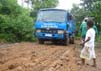
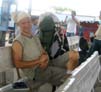
I guess it was naivité on my part to assume it was a simple request. I thought E-boy would advise his in-laws, his in-laws will advise the Aeta chief of my arrival and I would then hike to the community and introduce myself...WRONG! Tatay, Mr. Buhain (E-boy's father-in-law), had to go to the Aeta community, about 6 kilometers of rutted dirt road, to make the arrangement - my accommodation, my safety, the availability of a guide for me, etc. The following day, he waited at the port to pick me up, took me to his house for breakfast and drove over to the Aetas again to drop me off. I was embarrassed to have caused such an inconvenience. I asked Tatay not to bother anymore. He explained that in their custom, I was his responsibility during my stay with the Aetas, and will continue to be so, until I come down the mountain. He asked me to stop by his house to announce my leaving before I board the ferry. He would also stop by from time to time to ensure I was ok. I didn't realize my simple request was a huge package. I have to learn that hospitality outside Metro Manila is extended and more involved.
The Reality
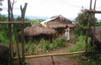
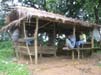
The Aetas, at least the community I was in, are still into hunting but it's not an everyday thing. Most of them talk about it from stories told to them by the elders. It would have been an imposition to ask them to stop their livelihood for the day so I could learn how they hunt. Given their proximity to the main road (about 6 kms), they now have easy access to middlemen who buy their agricultural products for resale to the general public. With the season, they
tend to cogon grass used to make nipa hut roofs. A major source of income come from fruits. They are lucky in that their 31 hectares of land is rich in fruit bearing trees - mango, papaya, avocado, jack fruit and coconut.
What I found disturbing was that their lives are still built around fear and uneasiness of the general 'unats' - that's what they call the outsiders for their straight hair. Going into town seemed cause for apprehension. It's difficult enough for them to get full education due to the long walks to town, but they also find a hurdle being absorbed into the workforce. Invariably, they go back to the mountains and resume life according to traditional ways.
Ending Thoughts
I didn't get what I came there for. However, given the level of appreciation I came away from knowing more about the Aetas, the jungle survival aspect did not loom as large or important anymore. Besides, that opportunity is always there*. I was given ringside seat to have an indigenous people open their doors to showcase their culture, history and more importantly, their struggle for integration into mainstream society. I wasn't regarded as a revenue-generating tourist but a human being who might emphatise. Through their narrative, I developed a deeper understanding of what it means to be underprivileged and disenfranchised in a country that discriminates against its own. Thanks to their increasing role in the local political scene, given the spotlight on cultural minorities, funding becomes more readily available from NGOs and local government alike. They have a long way to go...I mean...we have a long way to go.
--- TheLoneRider
* There is a fee-based jungle survival course offered in Subic, Olongapo where the Aetas of Zambales impart their jungle know-how.
Special thanks to:
- E-Boy and the Buhain Family for their accommodation and hospitality
- Kapitan, and the rest of the Aeta community, for looking after my needs while staying with them

 TheLoneRider TheLoneRider
"How can we find this AETA Community?" -- Maville M. Villanueva
(Aug 22, 2012) Sorry Maville, I have since lost contact with my host who made all the arrangements to make my visit to the Aeta community possible. Best of luck! I'm sure your outreach will touch some lives.
Maville M. Villanueva
(Aug 22, 2012) Hi - How can we find this AETA Community? I was planning to do an outreach with my friends this coming december to an AETNA Community. How many were they there? Thanks and Godbless, Maville
»» next story
»» back to Traveling
»» back to Homepage
|
 |
 |
|









 Outdoor Adventure Tours
 SandCastles Palawan Beach Resort